
A Name to Remember: The Life of Barton Salisbury
The Pioneer Spirit
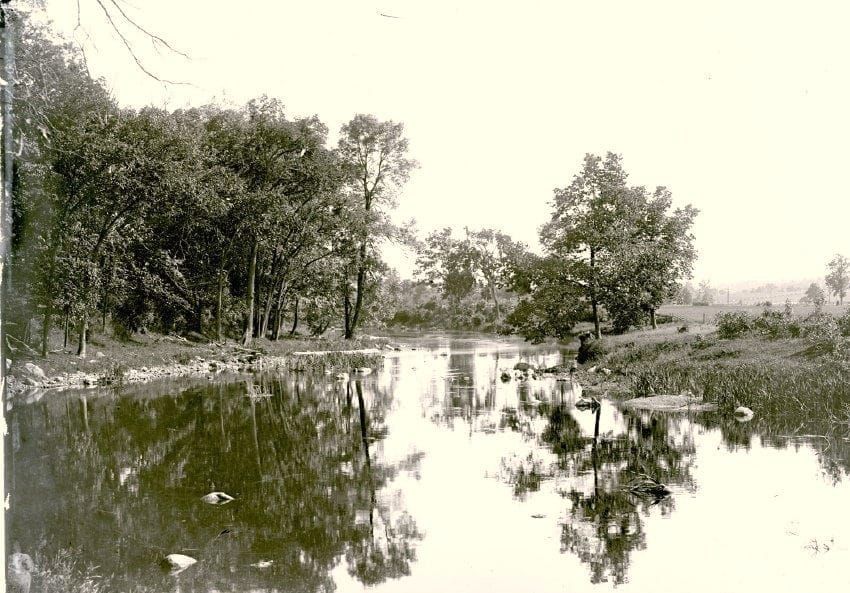
In those days, the Milwaukee River made its winding course through acres of trees so vast and imposing that the sun could hardly break through to the ground. Small remnants of the Native tribes that had lived in Washington County for ages still roamed around the land that had been bought by the US government in the early 1830s. Surveyors and land moguls from Milwaukee had struck out and established the community of West Bend, but one young surveyor was looking even further into the future.
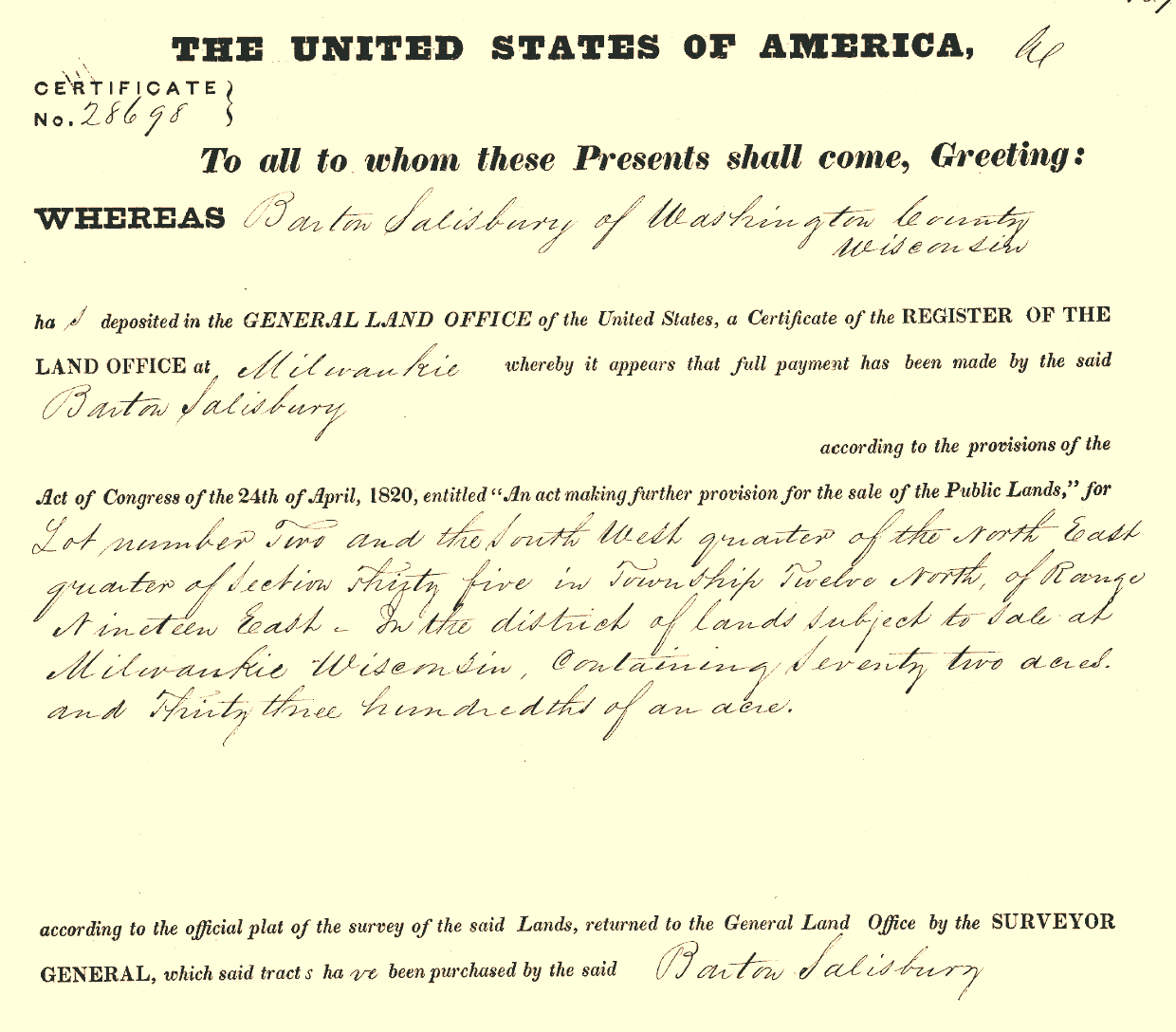
Barton Salisbury was born in the state of New York in 1813. He grew up in Jefferson County, New York, before moving to Ohio with his father in the 1830s. Salisbury came from a large "Yankee" family which had already been in America for generations. Salisbury met and married his wife, Armina Litch, in Cuyahoga County, Ohio, in 1834. The young couple remained in Ohio for a few years before setting out for Milwaukee. During this time, Salisbury was learning how to survey land. Surveying was an invaluable skill during this time of westward expansion.
Unfortunately, upon arriving in Milwaukee, Salisbury was unable to find work. He and his wife returned to Ohio and began saving up to support their dream of a new life in Wisconsin. They returned to the wooded state of Wisconsin in 1839 and lived in the newly settled town of Mequon. Here, Salisbury found work as a Carpenter and soon gained enough local respect to be made Justice of the Peace. Often his wife would have to serve as the only witness for these pioneer proceedings. He bought a 160-acre farm and made good money working the land and operating a tavern. But Salisbury was a man who had trouble staying in one place for long. He would get away periodically for surveying expeditions.
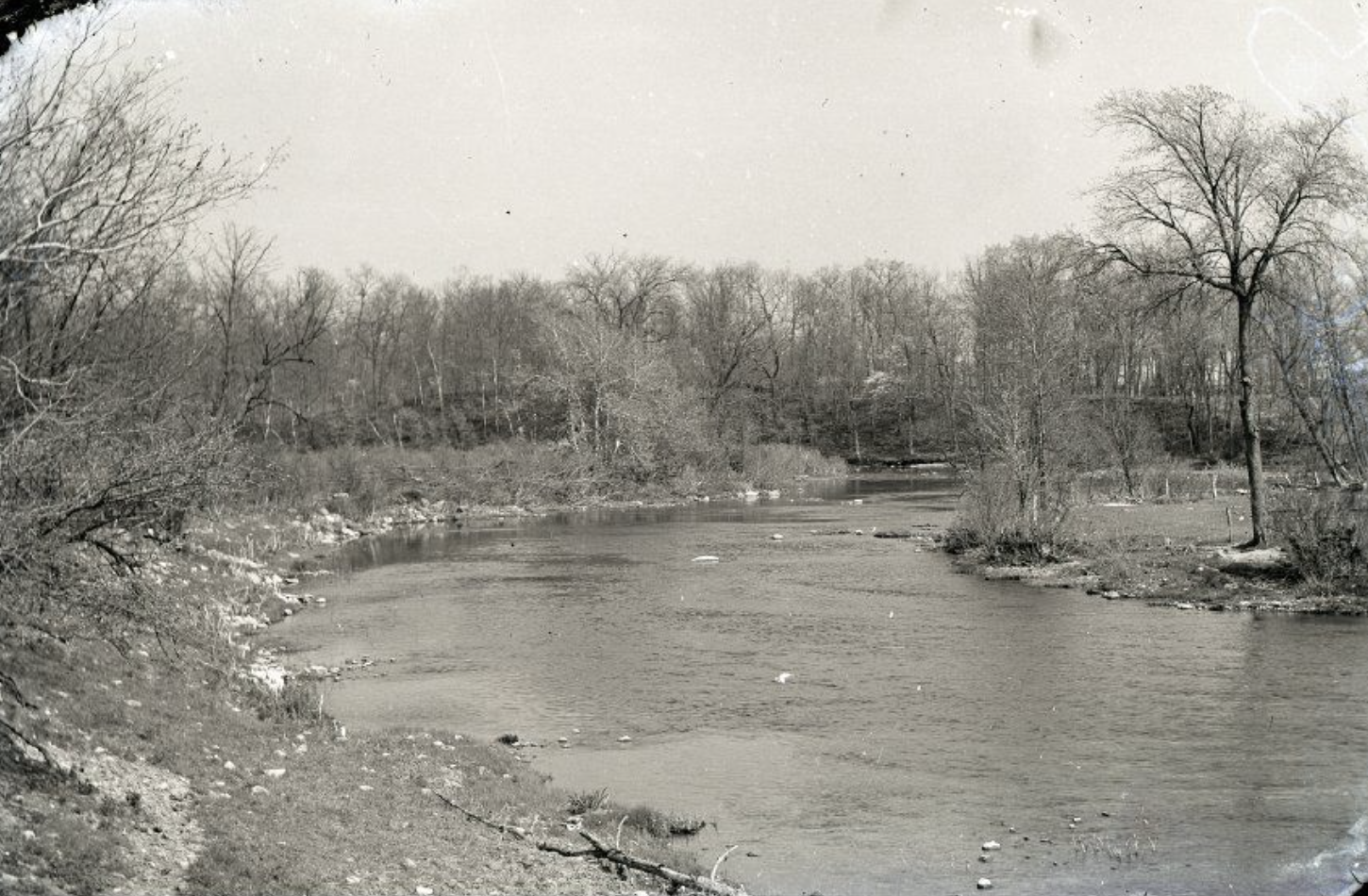
Traveling up and down the Milwaukee River, he studied the land as he passed. From all descriptions, Salisbury was the type who wanted to make a mark, and in the earliest years of this county, becoming the founding father of a village was the way to do it. On one of these expeditions up the river, he noticed how it dropped off sharply. Salisbury’s family had worked mills before, so he would have had the experience to know that this drop produced substantial power.
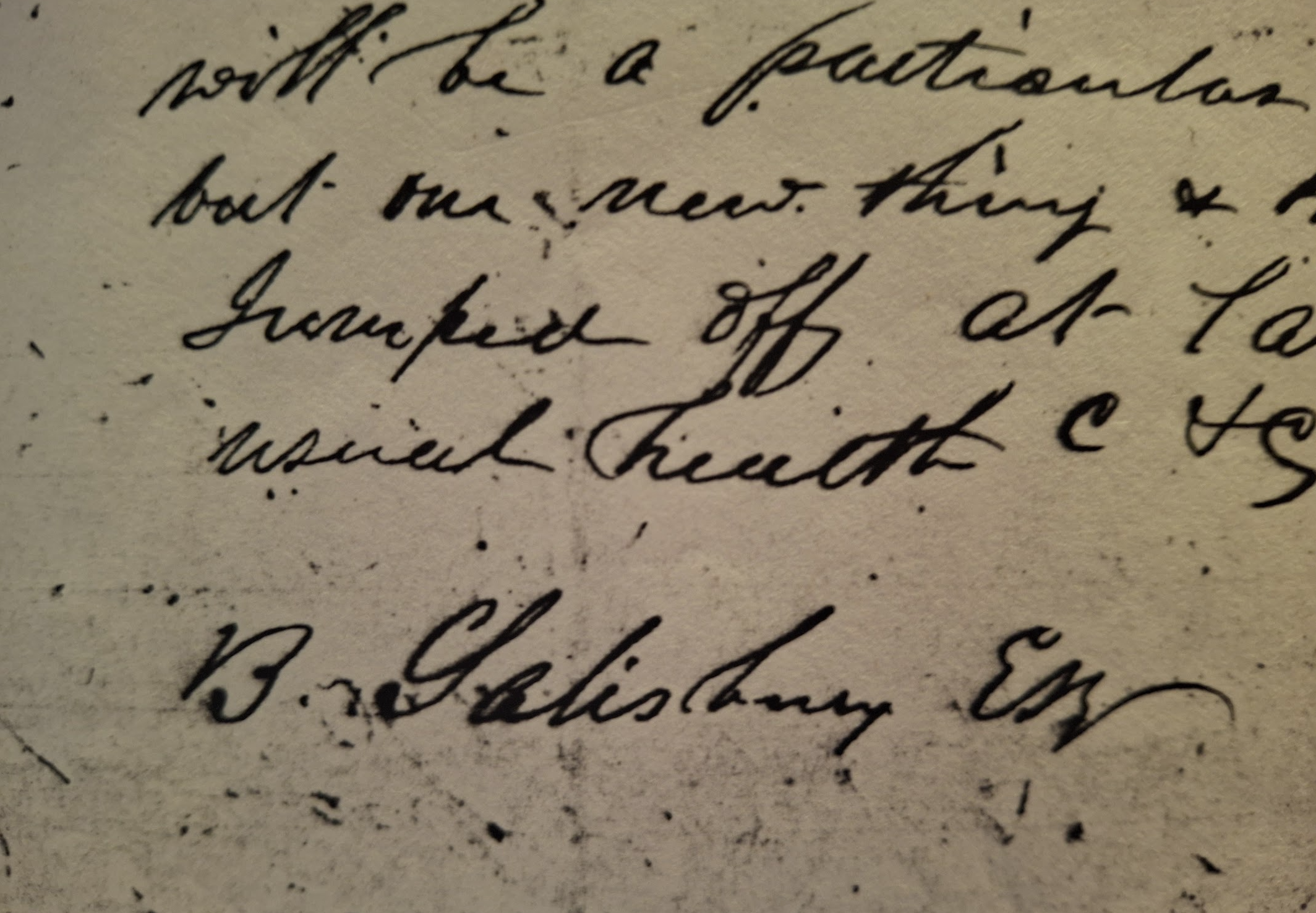
Salisbury decided to establish a sawmill on the river in what would become Barton. He returned home and told his family of his ambition. His wife, growing tired of the hardships of settler life, decided to return to Ohio with their children. Barton promised her that he would build a community prosperous enough to support family living.
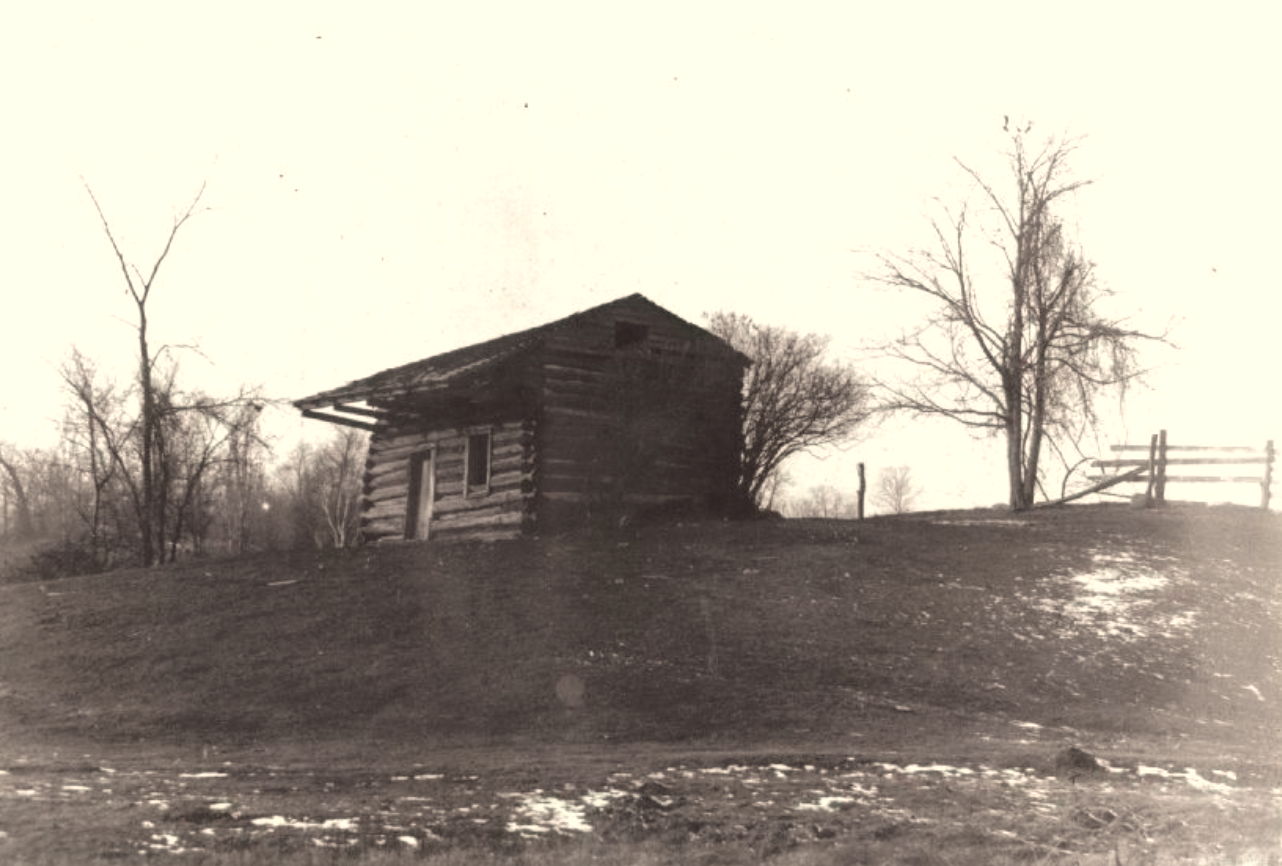
In the fall of 1845, the early residents of West Bend found Salisbury hewing logs and constructing a small cabin. A strong community was a necessity of the time, so, although all but strangers to him, these West Bend pioneers set to work helping Salisbury build his home. Soon afterwards, Salisbury began construction on the mill. By the winter of 1845, the word had already gotten out. "Salisbury's Mills", as it was first called, began drawing in settlers. By spring of 1846, the Sawmill was already up and running. And by 1847, the town had numerous settlers, as well as a gristmill and a mercantile. The town had its first meeting in 1848 and was named Newark.
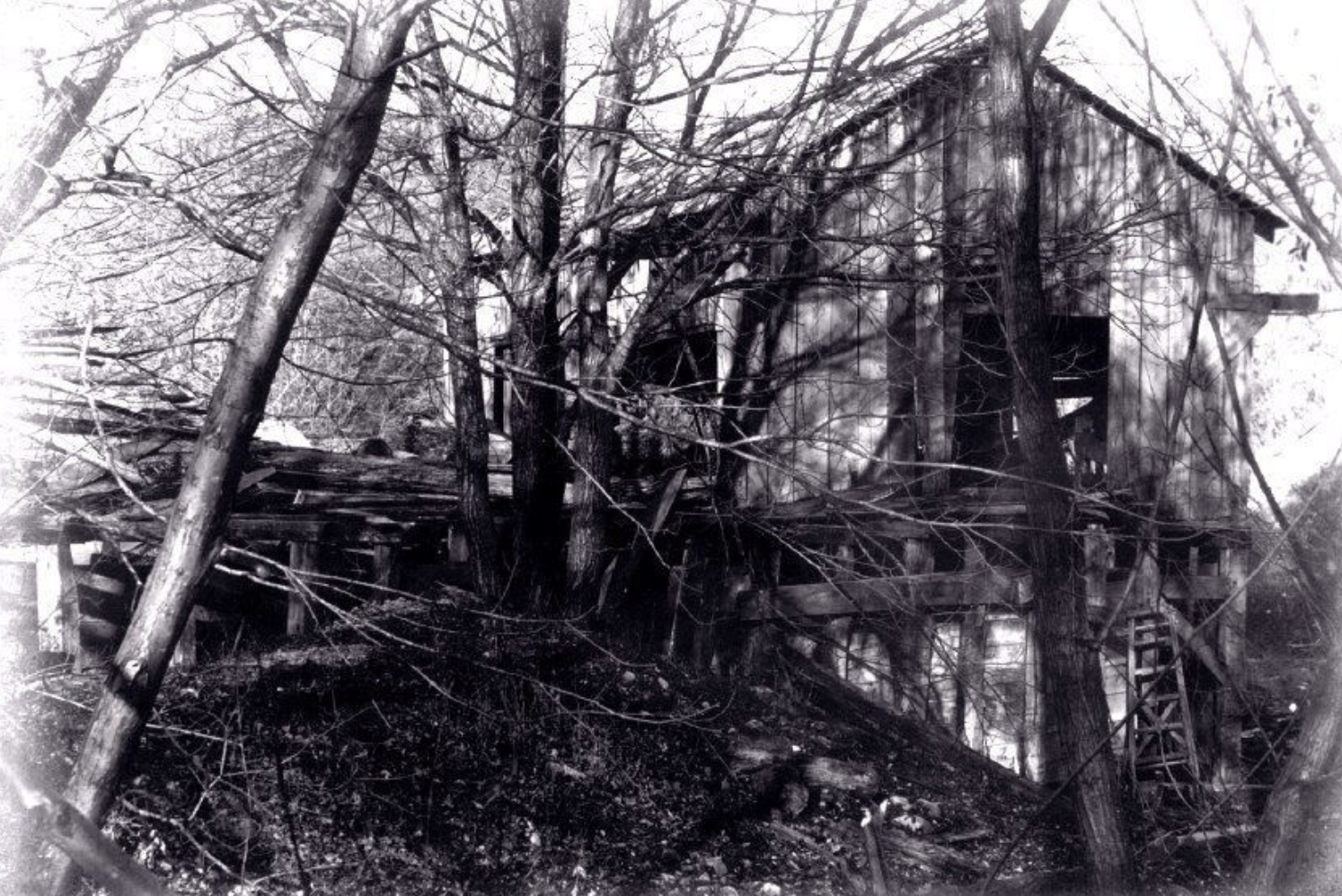
Barton began building a frame house and brought his wife and children to his flourishing town. But by 1848, Salisbury was feeling the itch to move again. He sold the sawmill and set out once more, purchasing 160 acres and establishing Newburg. A natural leader, people seemed happy to follow Salisbury, and within a few months, many settlers were already populating his newest settlement. Barton decided to build a hotel. He commissioned two of his young nephews from Ohio to build this early hotel. The community doubted the capability of his teenage nephews, so Salisbury put his hands to work again, constructing the building.
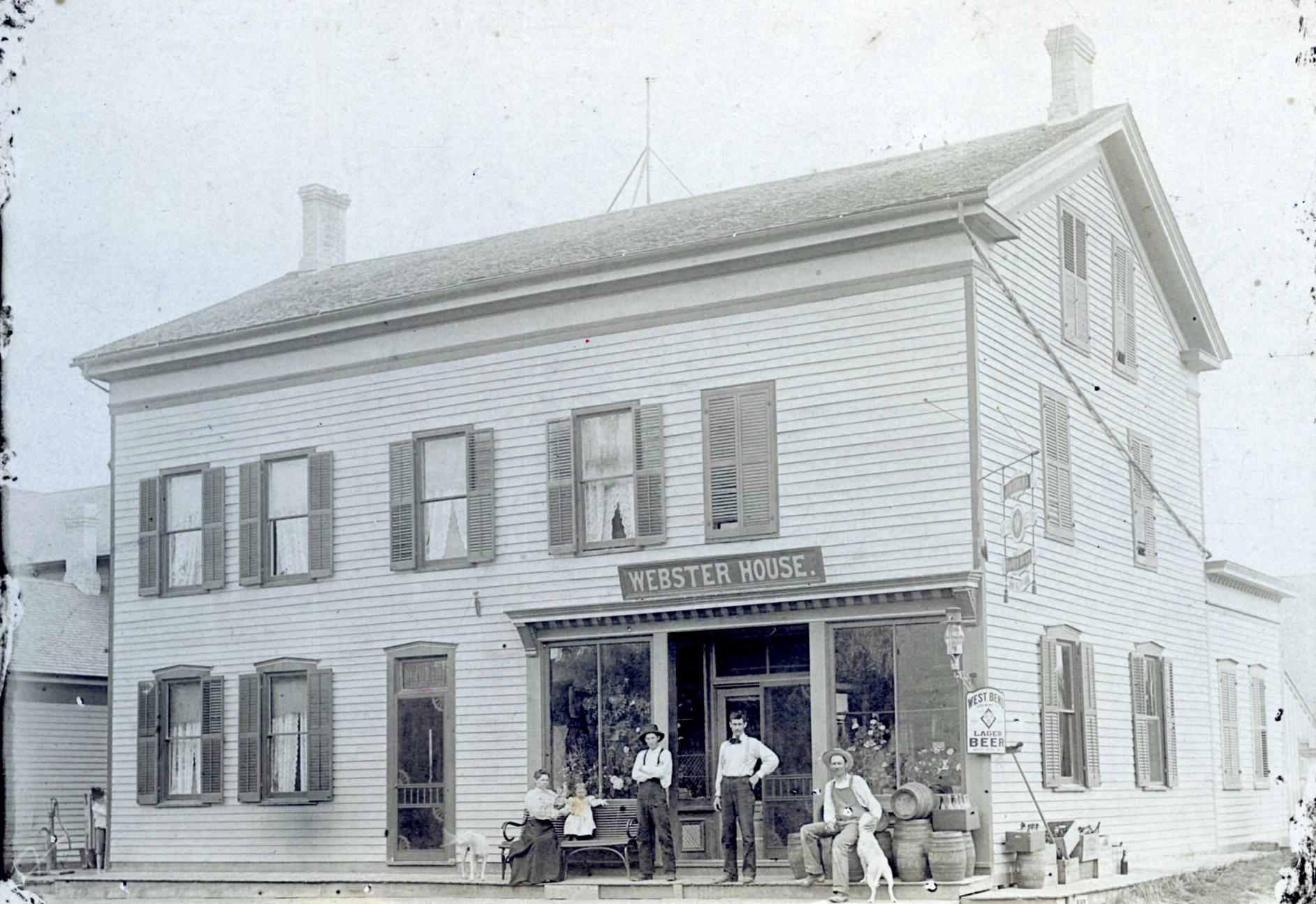
This was his last endeavor, however. On October 14th, 1849, Salisbury was putting up rafters for the roof. The log he was on was rotted and broke under his weight. Salisbury fell to the foundation of the building and died that night at the age of 36. His wife remembered him in an interview for the 1881 book The History of Washington and Ozaukee Counties as "an honorable, just and charitable citizen; a man who always knew how to keep his own spirit under control, and therefore one who could control others " (Western Historical Company, pg. 547).
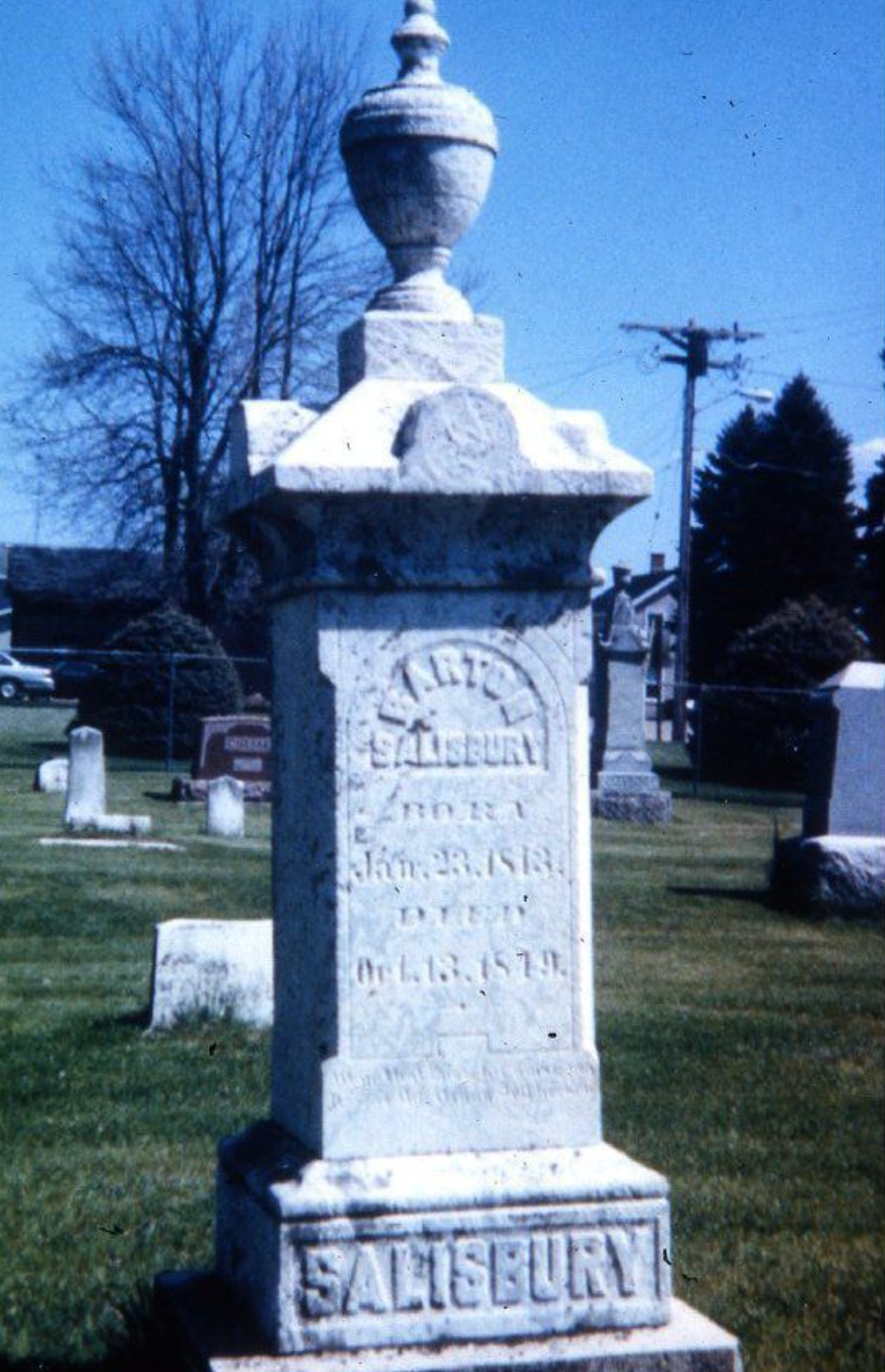
In 1853, Barton was renamed to honor its founder. Barton Salisbury was an example of true ambition and bravery. He was a man who saw potential in the forests and landscape that we now call home. His legacy lives on in all of the visionaries and entrepreneurs who still strike out today and dedicate themselves to the future they dream to be possible. Barton Salisbury is buried in the Newburg Union Cemetery.
Preserving the past, for tomorrow
Community support keeps Washington County’s stories alive. Make a difference in preserving our community’s historic places and cultural heritage today by becoming a member.