
Legacy Underfoot: Uncovering Frisby-Wagner House's Historic 1860s Floor
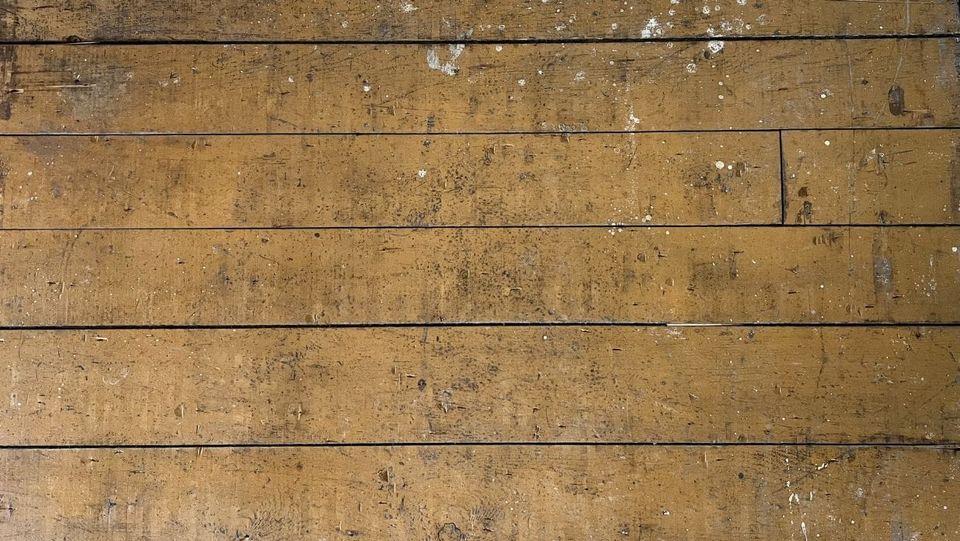
After over a century of being stepped over and entombed, the original Victorian Era flooring inside the Frisby-Wagner House is finally seeing the light of day. And boy - if these floorboards could talk, they'd have a lot to say!
Welcome Center Update
Heritage Center staff are working vigorously to bring new life to the Historic Frisby-Wagner House and Welcome Center, particularly in the restored parlor room and exhibit.
The most recent parlor project? Analyzing the eras of flooring as the building has evolved through different generations of style and design.
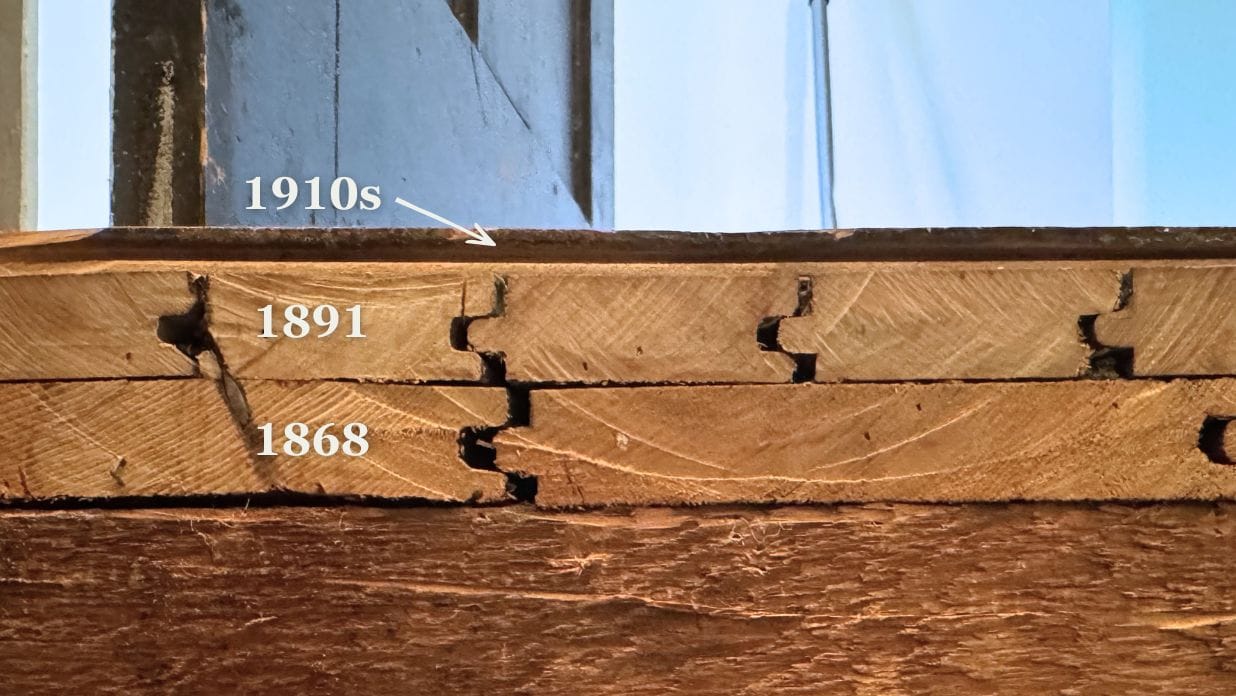
On the very bottom lies the 1868 'Frisby Era' flooring, which has remained practically untouched since the late 19th century. In the parlor room, the Frisby era floors are fairly intact, and still have remnants of the original finishings and design of the space.
So, what have the floors told us about the story of Frisby-Wagner House?
Colors & Finishings
Before hardwood flooring became popular, early Victorian style (Frisby Era) often implemented soft wood flooring, like pine. This type of flooring was tongue and grooved into place with the intent of staining or painting to protect the floors and make them easier to clean.
Paint was a popular middle-class option as it was cost-effective, while still providing an element of style. The current state of the 1860s flooring was visually and digitally matched to historic swatches and paint colors made today.
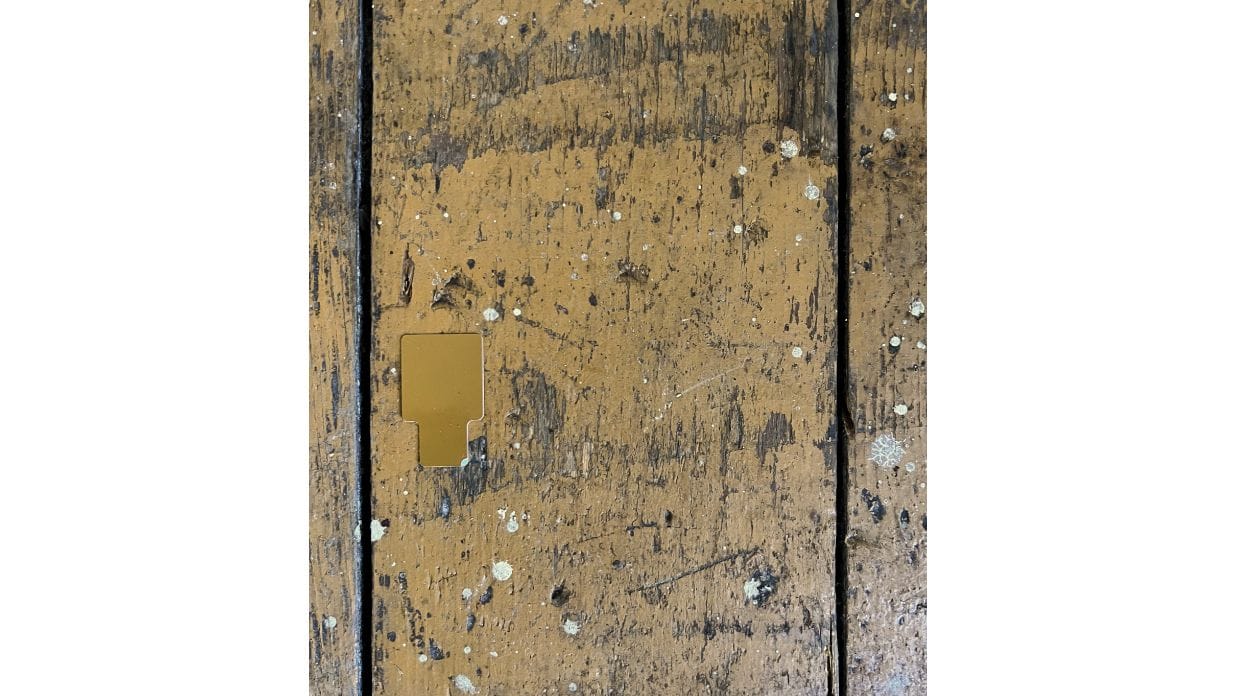
Earthy paint tones, like the golden-tan hue of the Frisby floors, were typical for Victorian Italianate Homes.
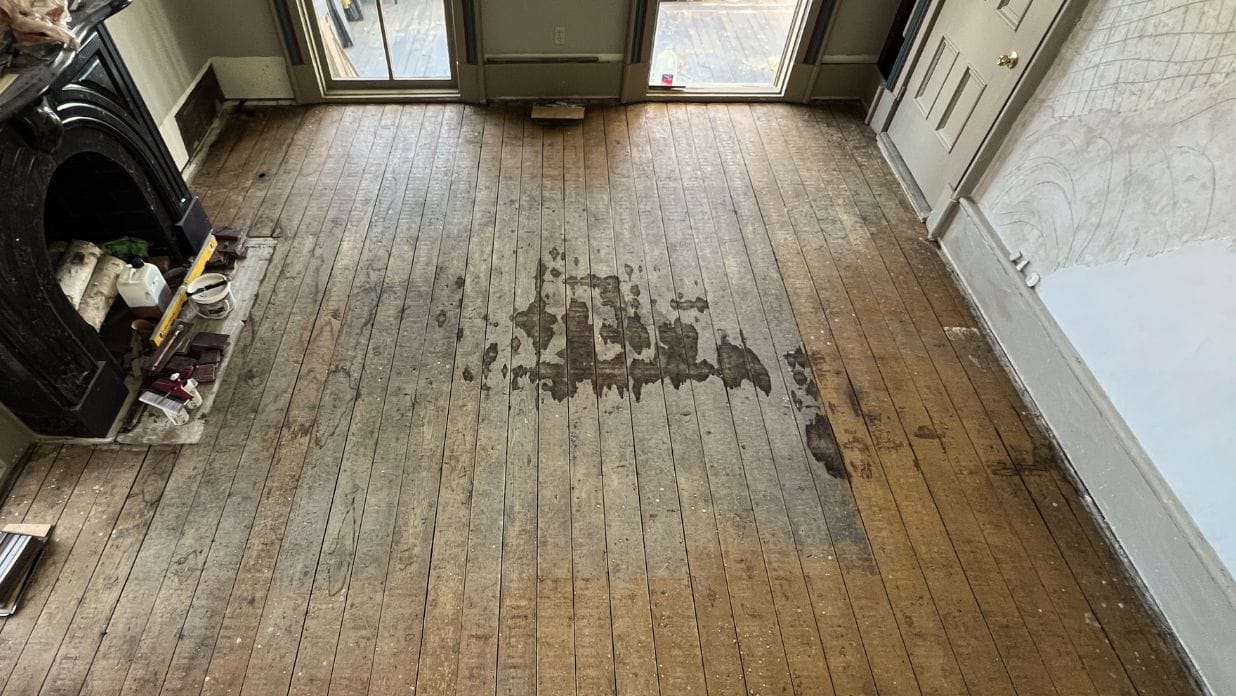
Additionally, some discoloration in the middle of the floor shadows the outline of a lasting decorative floor covering. (Imagine an heirloom rug or a patterned canvas floorcloth!)
Renovations and Changes Through Time
If you look close enough to these historic floors, you'll find the sneakiest secrets about the design of the room.
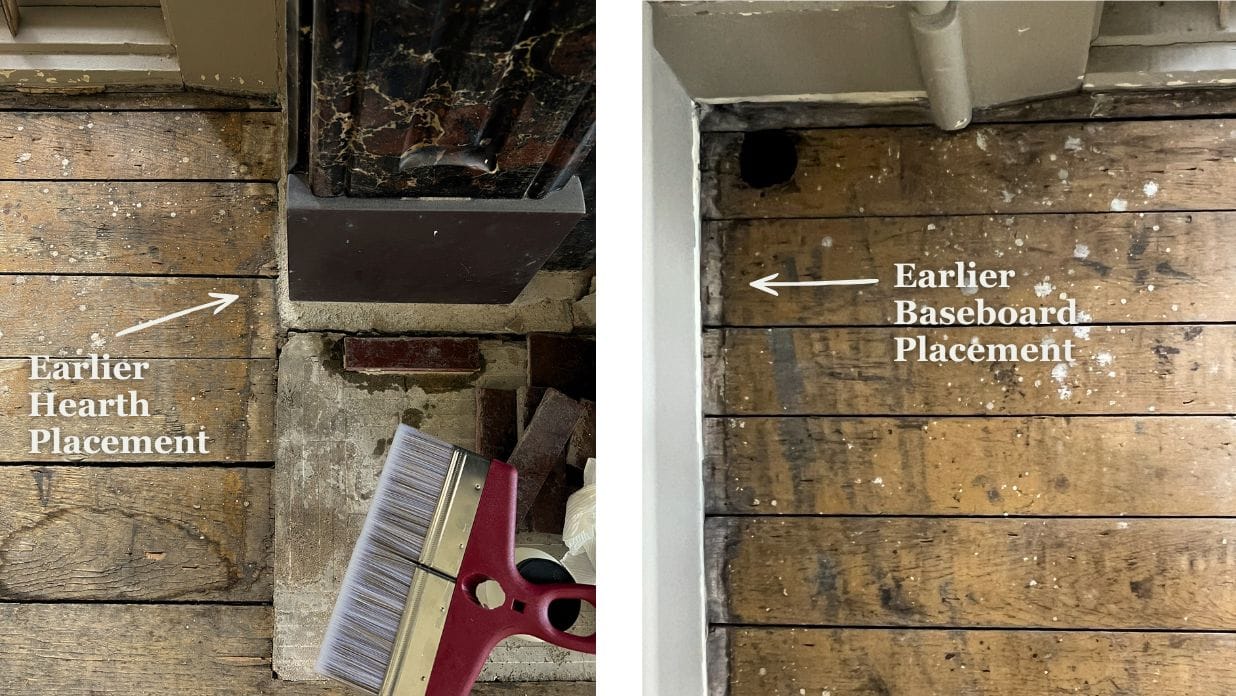
Along the edges of the room, faint outlining mimics the ghosts of different decorative elements in the parlor. These lines indicate there may have been a different - perhaps more elevated - version of a hearth and mantel piece on the parlor fireplace.
Along the edges of the room, you'll notice similar lingering imprints of a thicker baseboard, as well as indications of a radiator that might've been installed later, and drilled holes for water piping.
Why this Matters
Like detective work, preservationists use these subtle hints in the floors, and other uncovered components, to get a glimpse at what these spaces could've looked like back in their prime!
With little prior knowledge or photos about how the Frisby-Wagner House has changed, Heritage Center staff have relied on this approach to record the most authentic representation of particular time periods throughout the building's past.
What's on Deck?
Finishing touches are underway as we near the opening of the Welcome Center this summer!
Here's what we're working on:
- Installing reproduction hardwood flooring in the parlor to represent the 1890s
- Mounting historically authentic doors and hardware - inside and outside
- Polishing up paint and hanging period appropriate wallpaper
More on the Welcome Center
 The Tower Heritage Center
 The Tower Heritage Center
 The Tower Heritage Center
Preserving the Past, for Tomorrow
Community support keeps Washington County’s stories alive! Make a difference in preserving our community’s historic places and cultural heritage today - by becoming a member or making a donation.