
Saxonia House Archeology Site
Archeology in Our Backdoor
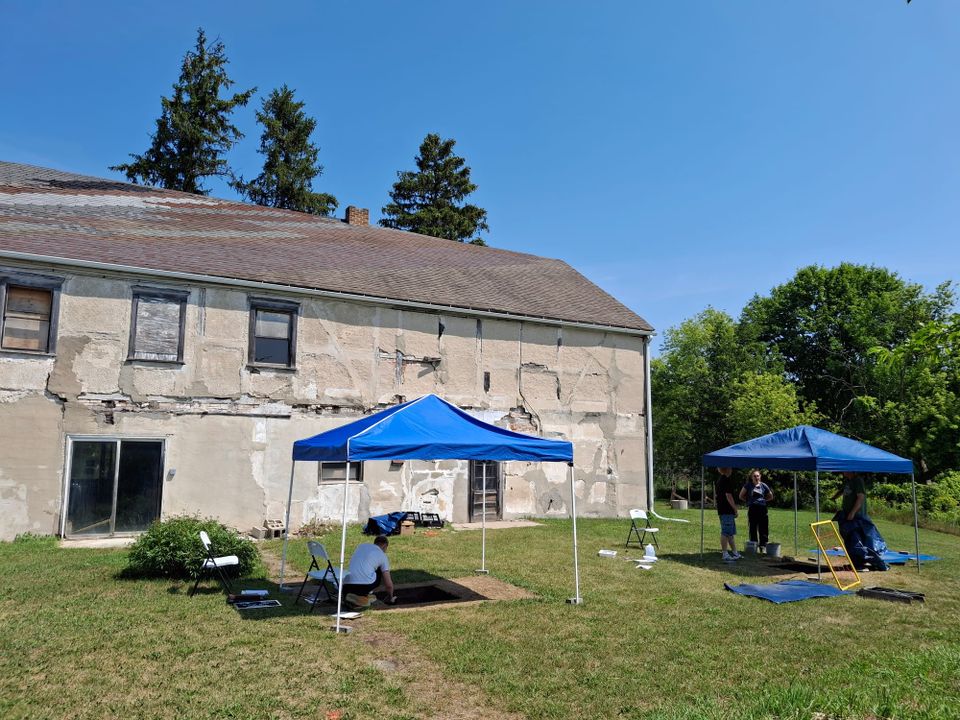
When you think of archaeology, you might think of Egypt or Rome. Places with centuries upon centuries of history and mythology to be uncovered. If you think of archaeology in Wisconsin, you’d probably think of the mounds or other ancient sites. But would you ever think of an active archaeology site happening right now in Fillmore? Dr. Ned Farley and his team of students from Wisconsin Lutheran College in Milwaukee have been uncovering the history of the 1855 Saxonia house one layer of dirt at a time. This summer, the group of young archaeologists led by their professor has been uncovering details that shed light on the life experiences and history of Washington County's early German settlers.
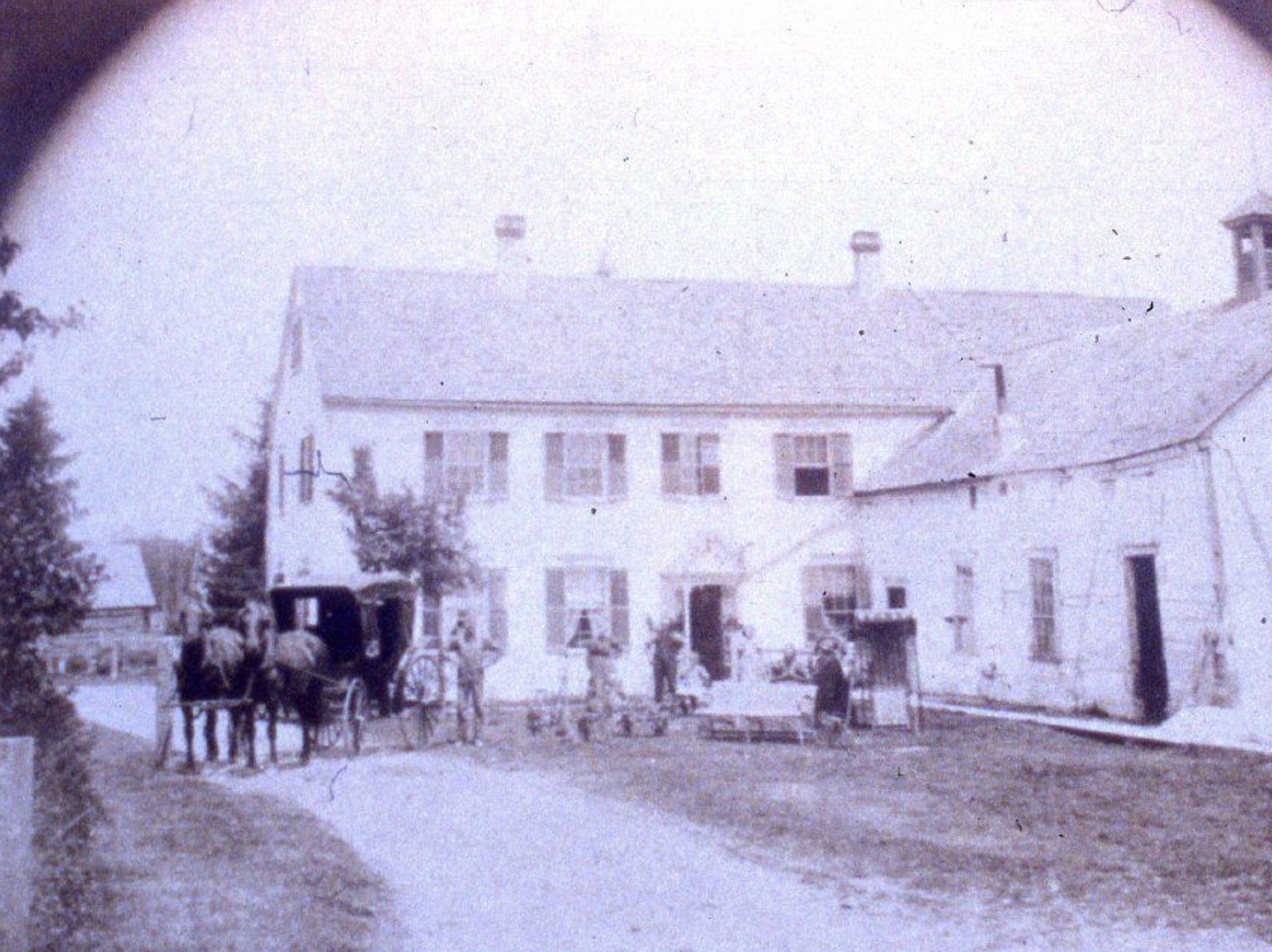
Saxonia House is a unique building that is deeply connected to the history and culture of early Washington County. In 1844, at 18, Ernst Klessig left his home in Saxony and made his way up the Mississippi River from New Orleans to Wisconsin, where he settled in Fillmore. In 1850, Ernst married fellow Saxon immigrant Liberta Poetszch. Together in 1855, they built Saxonia House. Saxonia House served as the family's home and the site of several businesses, including the Klessig Brewery, which Ernst started. It also served as a tavern, inn, meeting place, and the home for many other community sites.
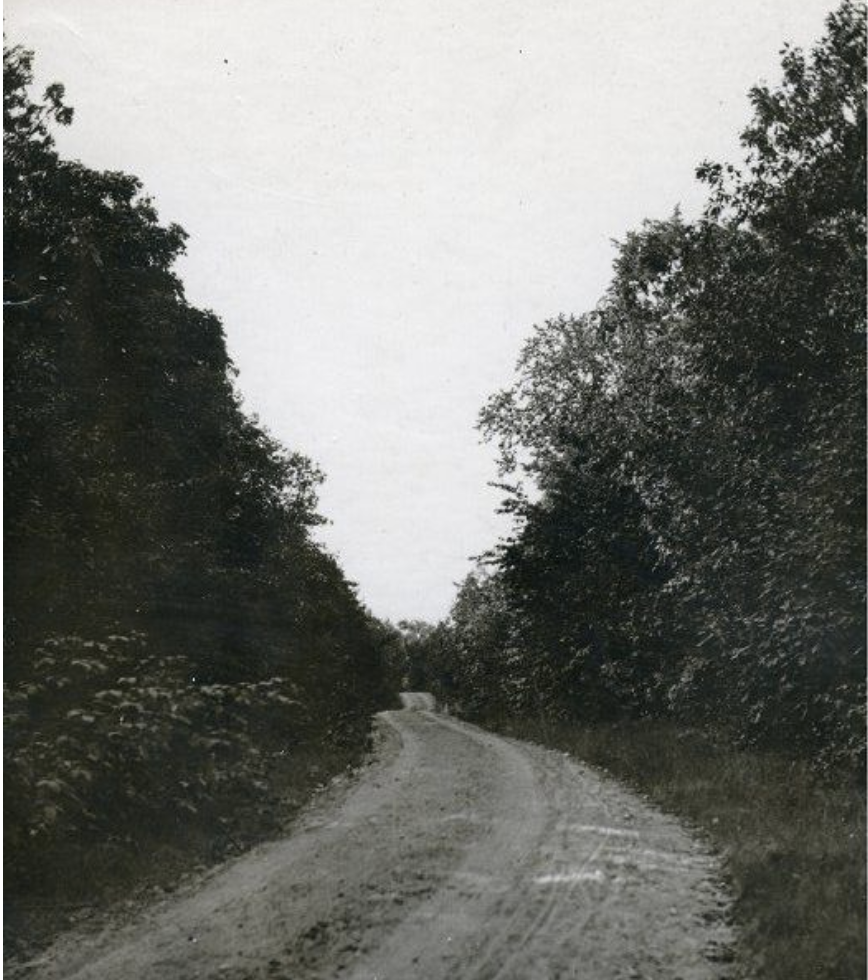
It's hard to imagine what the wilderness of Washington County would have looked like to the settlers making their way in an undeveloped land. Trees so thick they blocked the sky, birds that have long since moved deeper into the forests of the north. This is what the archeologists face when trying to interpret the evidence they find. The team of archaeologists is using non-invasive techniques to identify the location of a former addition to the building as well as a summer kitchen. Using a grid system, Dr. Farley and his students have begun digging into some key locations to find evidence of a foundation, as well as other glimpses into the lives of the family and patrons of Saxonia House.
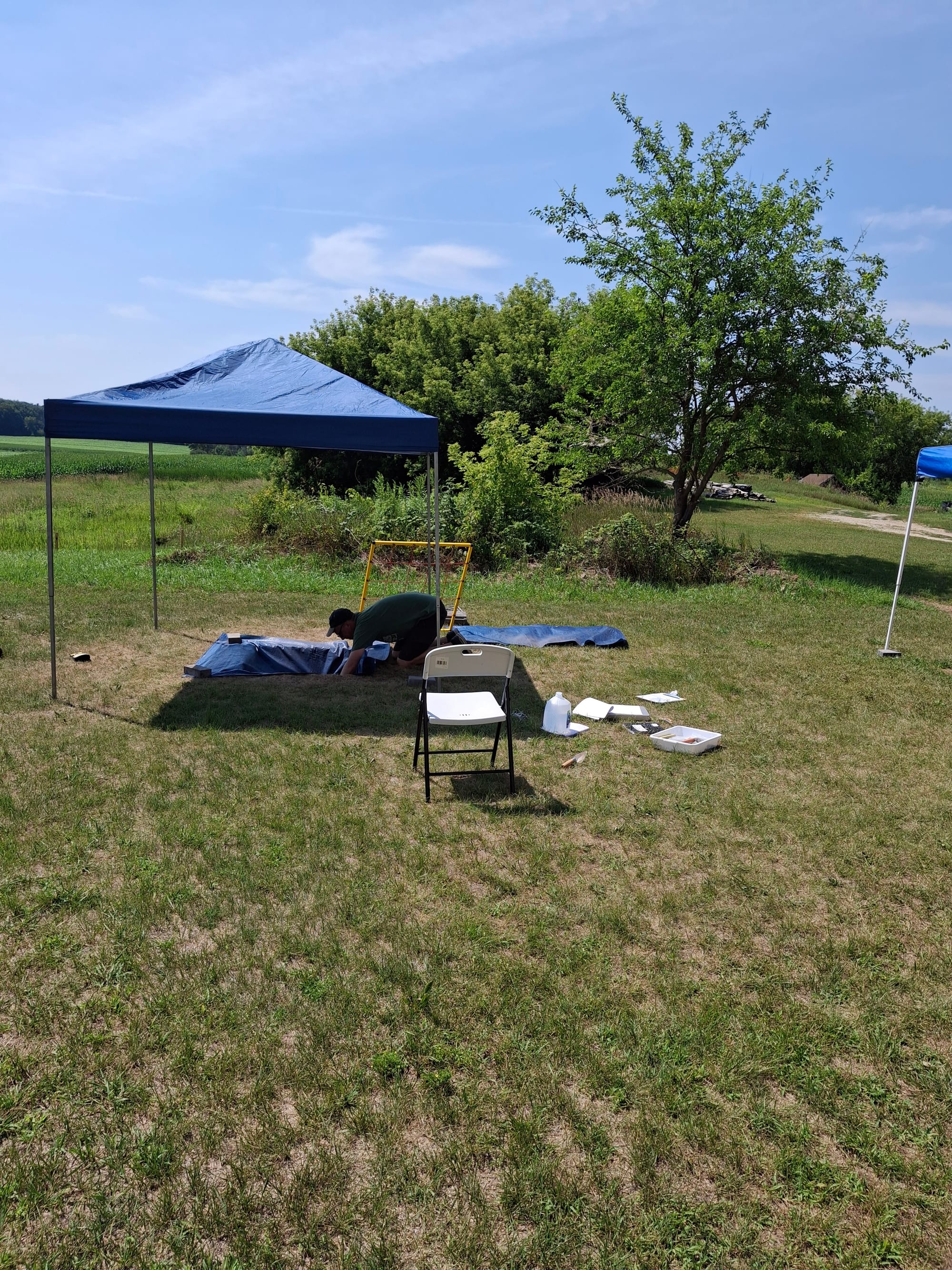
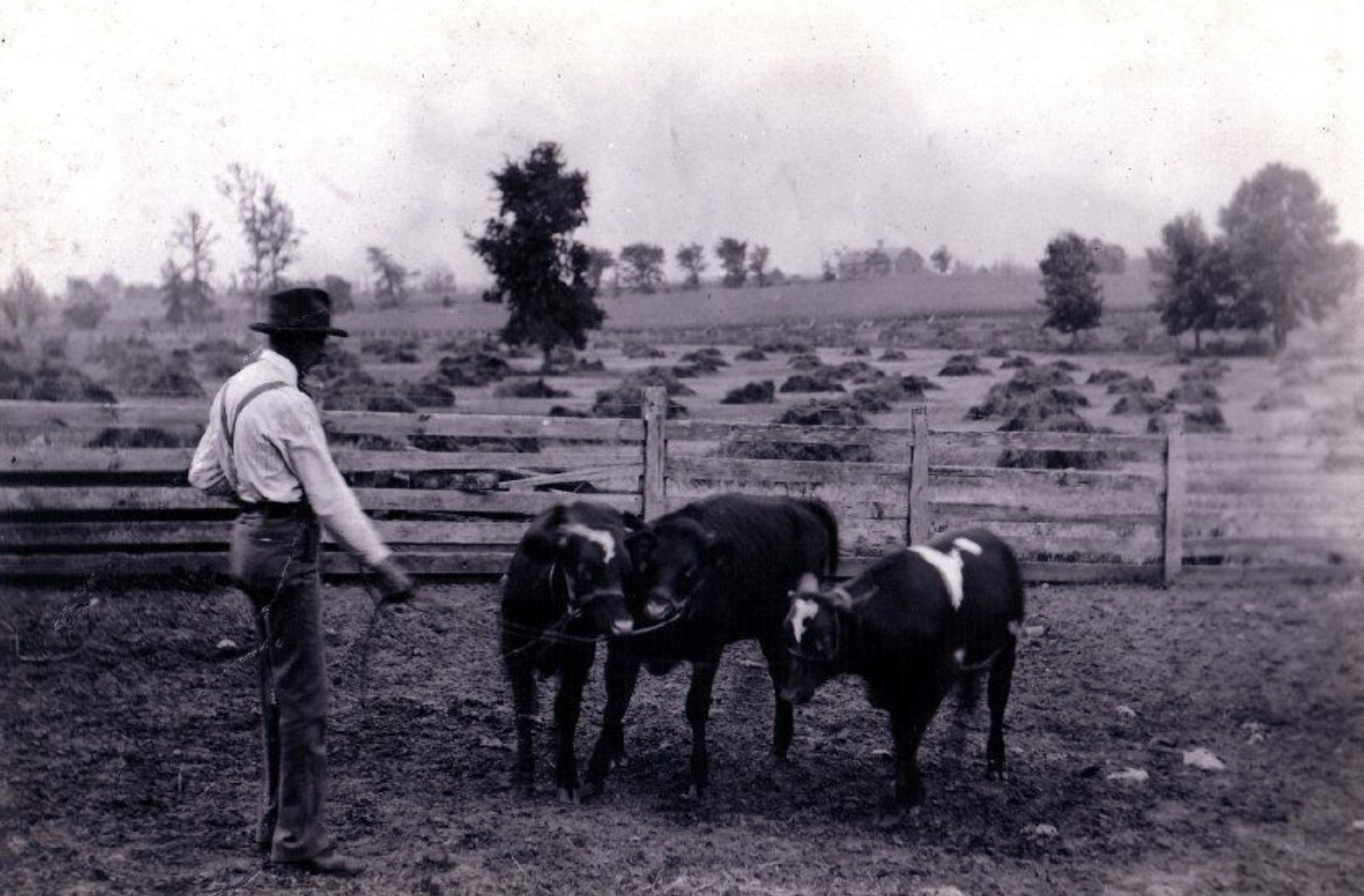
According to Dr. Farley, one of the goals is to recreate what the Klessigs would have eaten on a regular basis in the early years. So far, archaeological evidence has shown that the family lived off of hunted game such as deer and even beaver. Sheep and Cattle were not yet common in the area due to the thick forest. It wasn't until the latter half of the 1800s that Washington County was dominated by agriculture.
We had the opportunity to ask the team some questions about Archeology and their goals at Saxonia House. To begin, I asked Dr. Farley what made this kind of Archeology different from what we see in media like “Indiana Jones”. He explained that the key difference is the approach and standards. “Archeology is an occupation”; now it is defined by legislation and the scientific method. Using these methods, the team has uncovered fragments of dishes, building materials, and even a doll. These artifacts help us look into the lives of the Klessig family and into the lifestyle of the early settlers of Washington County.
When we asked the students what they were most excited about, they mentioned these discoveries and the excitement around using the skills they had been learning at school in real life. One of the students is hoping to use what they are learning at the Saxonia House site for a career in forensic archeology to solve crimes. Outside of history and forensics, there are numerous companies that need archeologists in our own state. It is also an occupation used in many major construction projects.
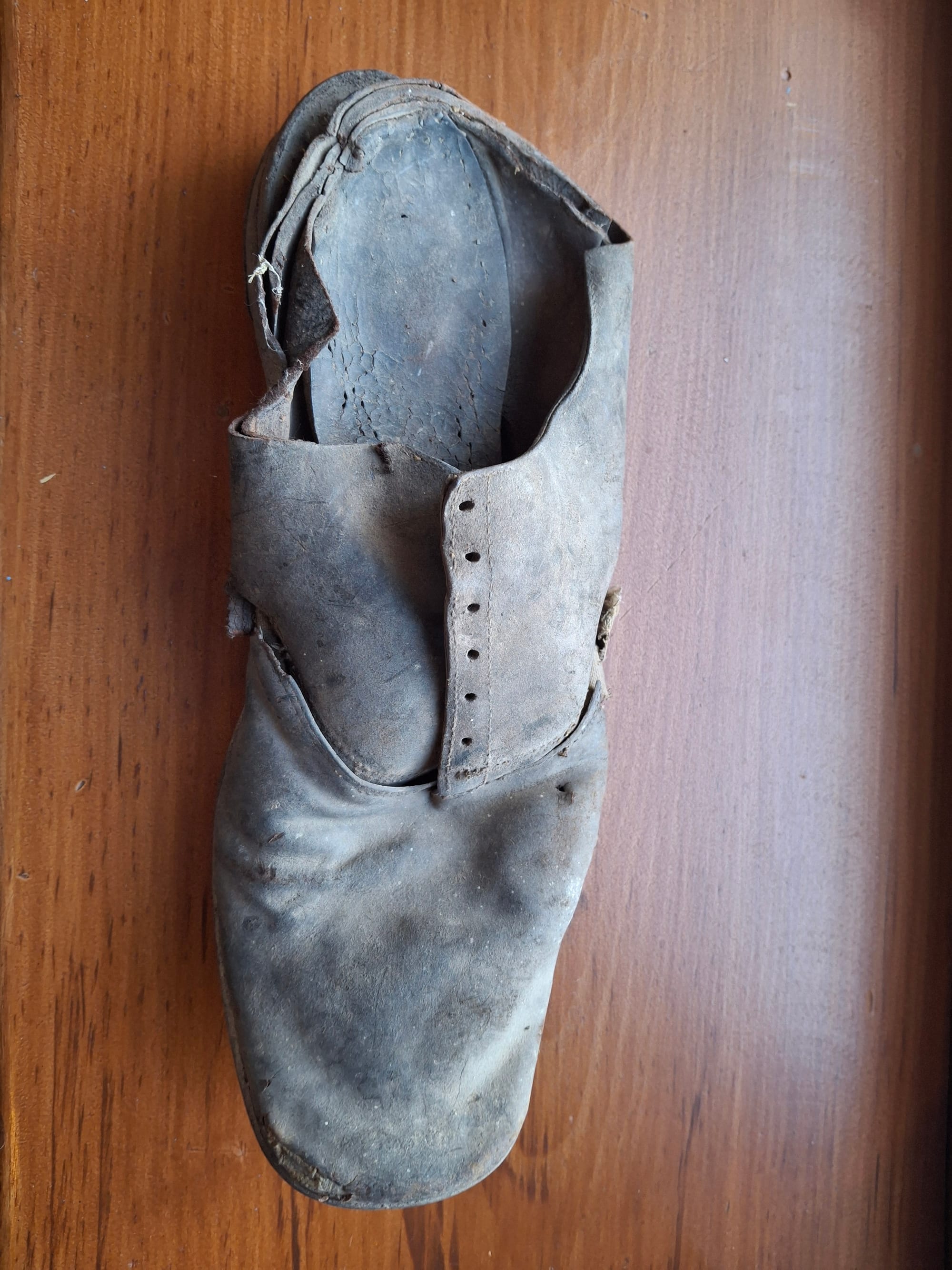
In our own staff visit to Saxonia House, we uncovered an interesting piece of history hidden in the attic. Hidden between the rafters, we found a 19th-century men's shoe. It is a leather work shoe that was common during the 1860s and 1870s. But the most interesting part is uncovering what this shoe was doing in the attic. Through our research, we learned that among many European cultures, hiding an old shoe in the attic was a common folk practice. It was believed that the shoe would ward off evil and help act as a good luck charm protecting the home. These good luck charms have been found across Europe and America, and the practice dates back to at least the 16th century.
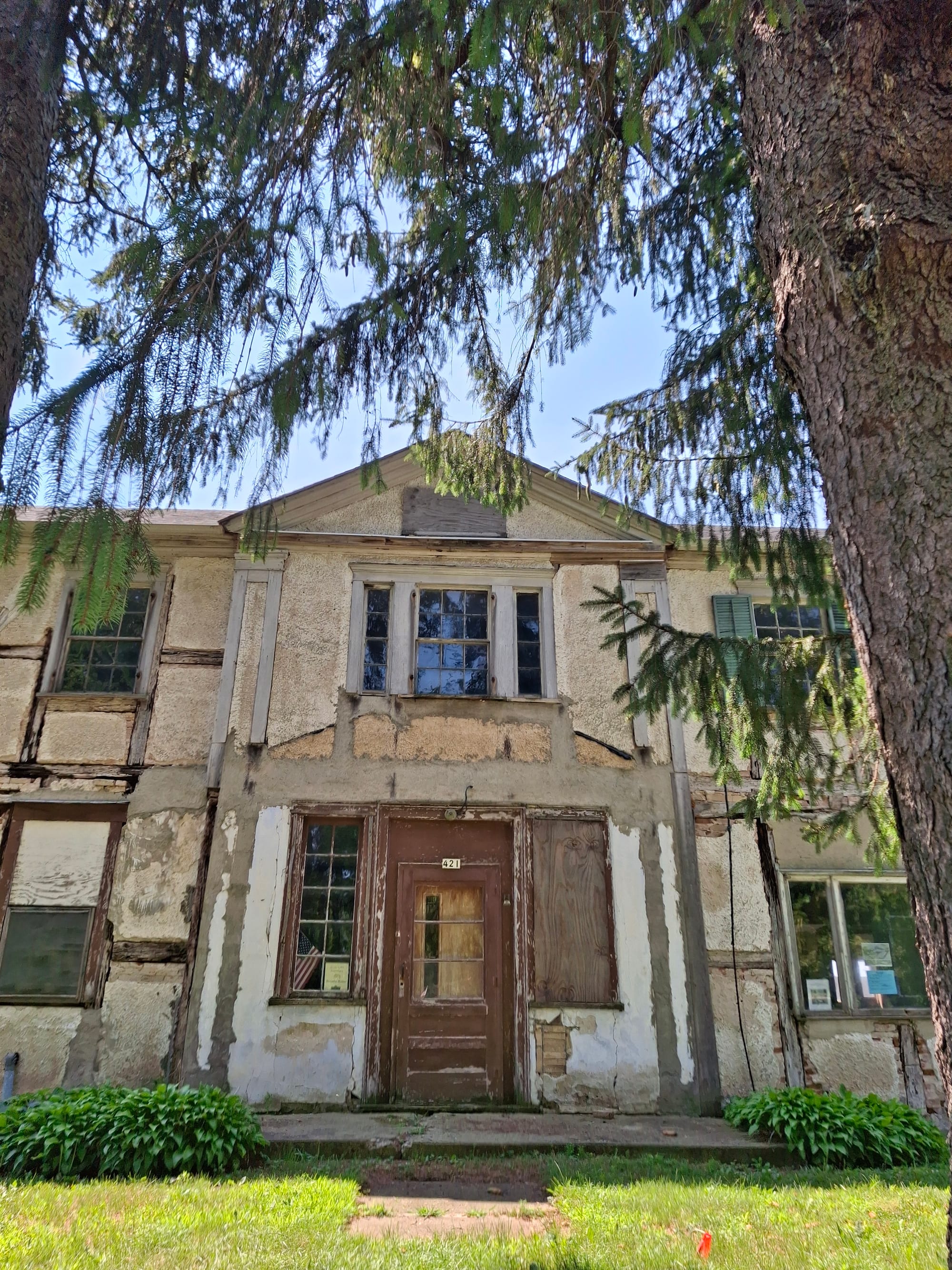
Archeology and historic preservation are about more than just finding cool objects. The real purpose is to find the story behind them so that we can better understand the lives and times of the people who came before us. The Friends of Saxonia House are working hard to preserve their largest artifact, the 1855 building. To help support their efforts, check them out on Facebook and at their website https://www.saxoniahouse.org/
Preserving the past, for tomorrow
Community support keeps Washington County’s stories alive. Make a difference in preserving our community’s historic places and cultural heritage today by becoming a member.