
Applying Historic Plastering Techniques in the Frisby-Wagner House
The integrity of today’s standing historic buildings is in the handiwork of the craftsmen who came before us. Part of historic preservation is bringing back forgotten artisan trades, where skilled hands touched every component of the process.
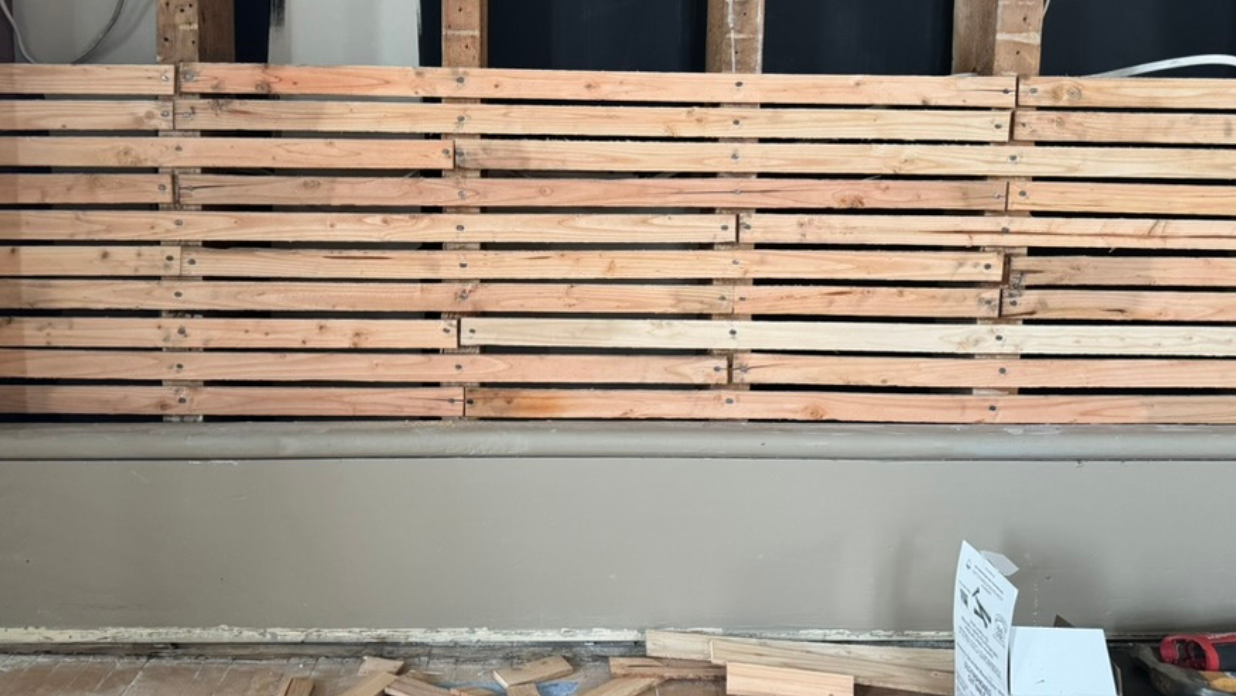
Staff and volunteers are working hard to bring original elements back to life in the historic Frisby-Wagner House, including revitalizing a 19th-century parlor room that will feature an authentic plastered and papered wall exhibit. What does that mean? Picture a wall-sized display that visualizes how walls were built, finished, and decorated in the past - shown by layers of lath, plaster, and wallpaper.
At this point in creating the wall exhibit, staff and volunteers have removed the modern drywall and are installing lath, thin narrow strips of wood that act as a support structure for plaster.
"This part of preservation is exciting... You're actually touching the techniques of how buildings were built historically." Steve Stuckey, Executive Director
Installing Lath and Plaster Inside Historic Frisby-Wagner House
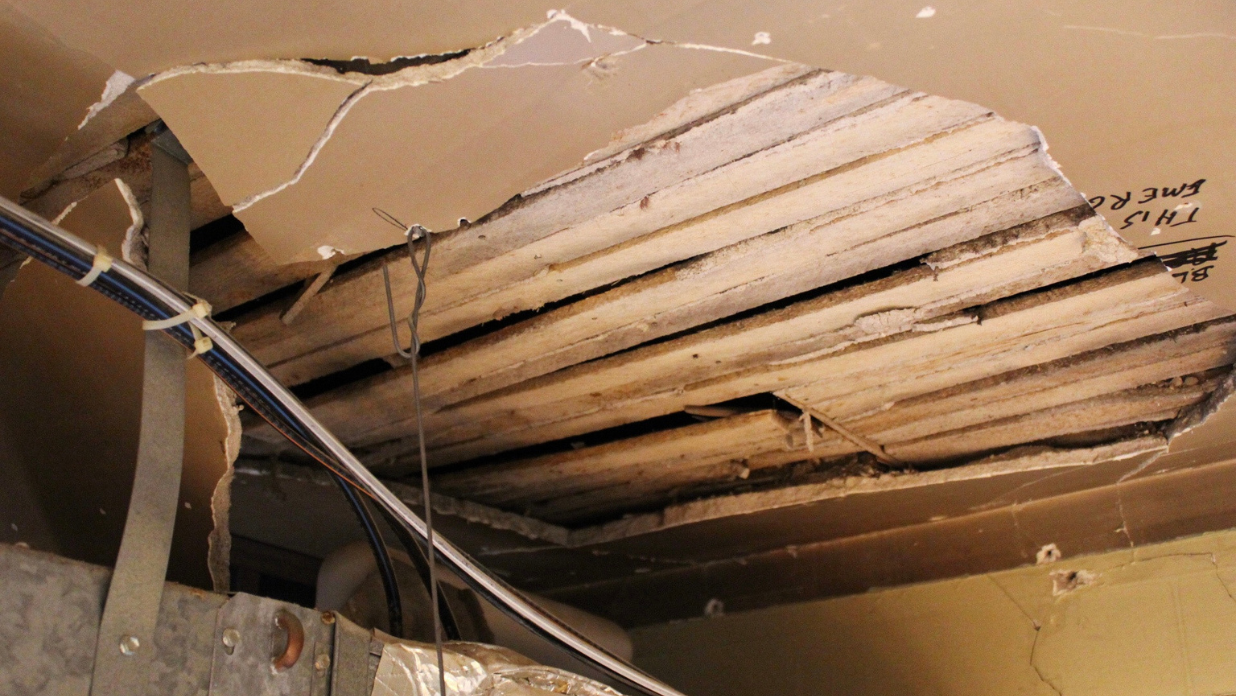
He who laths, lasts. Plaster is characteristically known to withstand decades due to its dense and hard nature. Unlike drywall, plaster is applied in two or three applications:
First coat = scratch; Second coat = brown or finish if it is a two-coat system; Third coat = finish coat if going for a 3-coat system.
On Lath
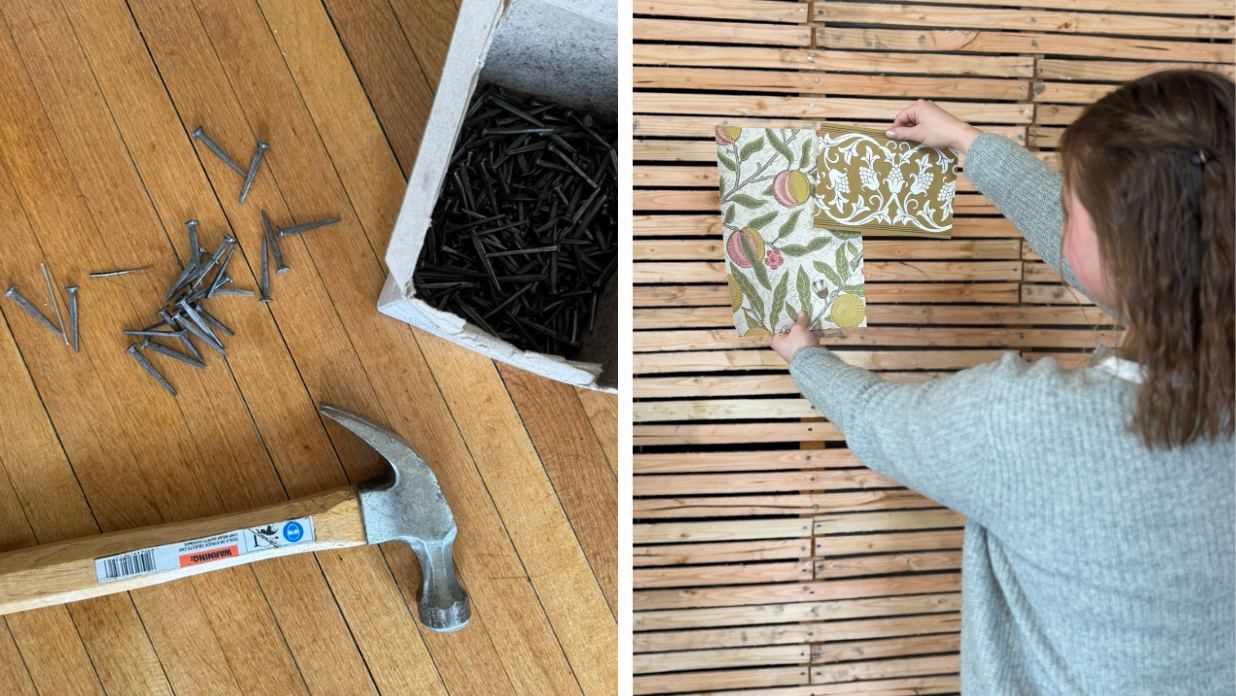
Prepping a wall for plaster includes nailing thin strips of wood atop the studs. This process is called lathing, and historically skilled plasterers would perform this job. The approximate gap between lath is typically ⅜ of an inch, allowing enough room for the first coat of wet plaster to seep between these gaps and slightly drupe behind the lath before drying. This process ultimately strengthens and holds the plaster "system" to the wall.
Nailed it! In the early 19th century, nails for lath were square-ish headed and hand-hammered. Mid-19th century and later, the cut nails were completely created by machines, including the heads!
Fast Facts about Historic Lath and Plaster:
- The species of lath wood varied from place to place, time period to time period. The lath inside Frisby-Wagner House is pine.
- Nails varied in size and shape, based on the manufacturing method. 19th century nails were cut by machine with hand-hammered heads.
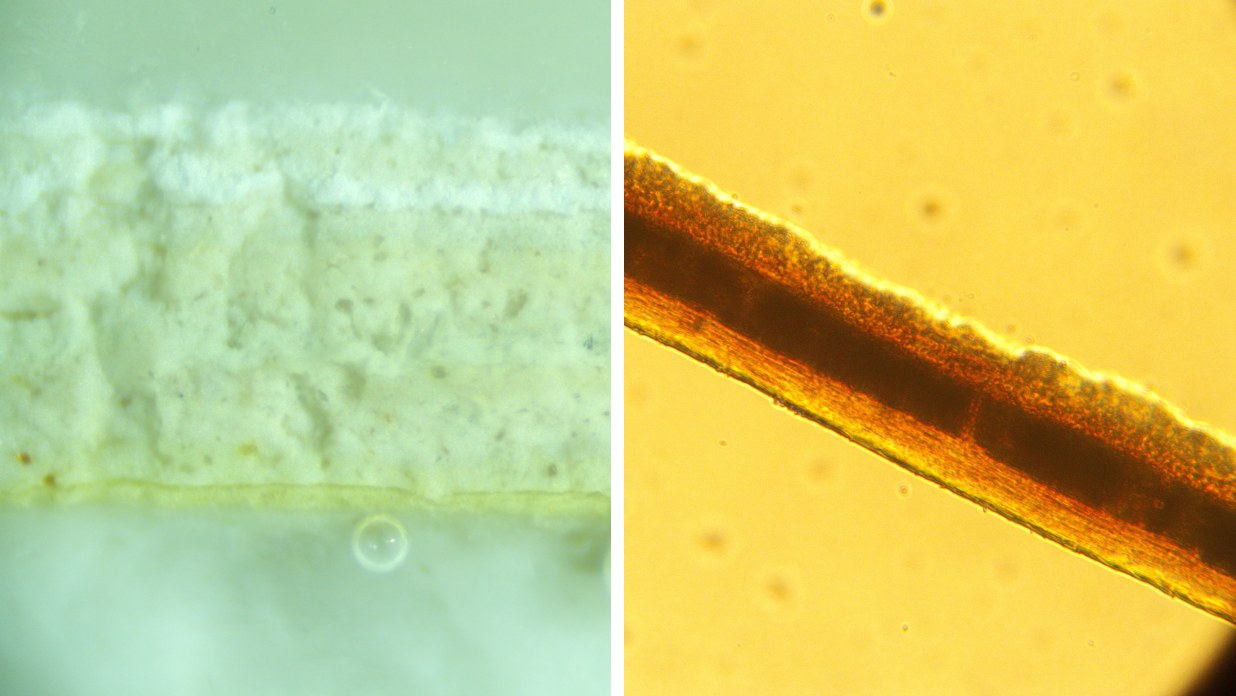
- 4 Simple Ingredients! Plaster is made by mixing lime, sand, water, and animal hair (like hog or goat!). All are essential components to keep the plaster together while it’s applied and dried.
What's Next for the Frisby-Wagner House?
The plastering over of this lath wall marks progress in creating a restored parlor exhibit inside the Frisby-Wagner House. The community will be able to experience this immersive room while visiting the soon-to-be-opened Welcome Center inside the Frisby-Wagner House. Coming next... wallpaper!
Restoring the Frisby-Wagner House
 The Tower Heritage Center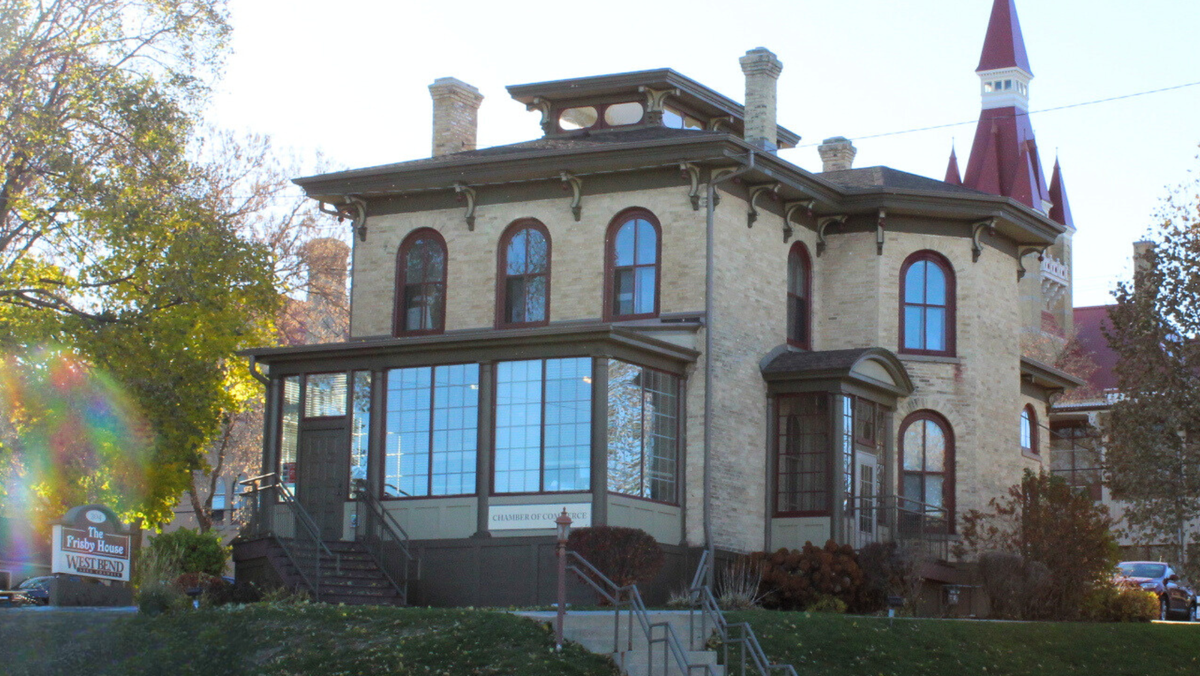
 The Tower Heritage Center
 The Tower Heritage Center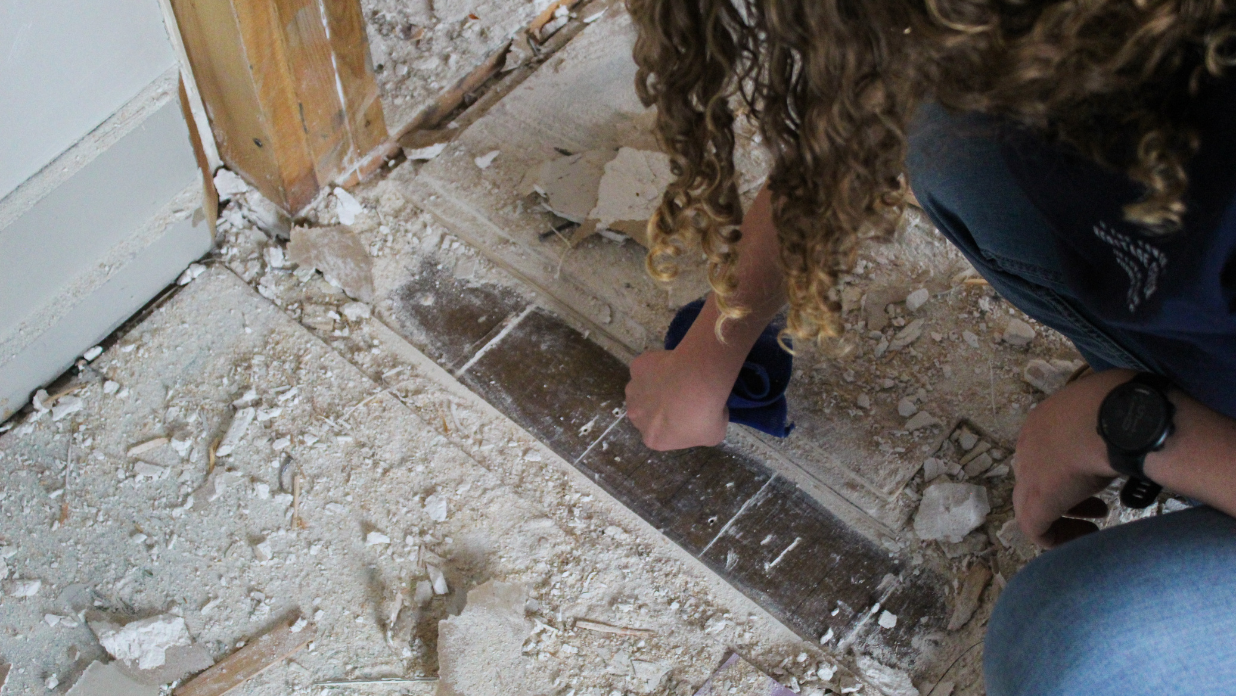
Preserving the Past, for Tomorrow
Community support keeps Washington County’s stories alive! Make a difference in preserving our community’s historic places and cultural heritage today - by becoming a member or making a donation.